A practical AI writing workflow: brief, draft, verify
Use AI for a useful first draft without handing over the facts, structure, or final editorial decision. A repeatable workflow with a worked example.
A useful AI writing workflow begins before the prompt and ends after the model stops. You decide what the reader needs, supply the evidence, and check the result. The model helps turn those decisions into a draft you can edit. That division of work makes it easier to see when a fluent sentence has outrun what you actually know.
This workflow works for an announcement, an article, a customer email, or an internal explanation. Keep the source notes, the first output, and the final edit together. They give you something concrete to compare at every stage.
Start with the reader's next decision
Write one sentence explaining what the piece should help someone understand or do. “Write about our new reporting feature” leaves most of the important choices open. “Help an existing customer decide whether to replace their weekly spreadsheet with the new export” gives the draft a job.
Then name the reader's starting knowledge. A customer already using the product needs different context from someone discovering it through search. Add the format, approximate length, and distribution channel. These constraints are useful because they make an outline easier to judge before you spend time polishing prose.
If you cannot state the decision clearly, ask the model for questions about the brief. Do not ask it to fill the gap with confident positioning. Our blog outline playbook offers a method for turning a reader's question into a sequence of sections.
Build a small evidence packet
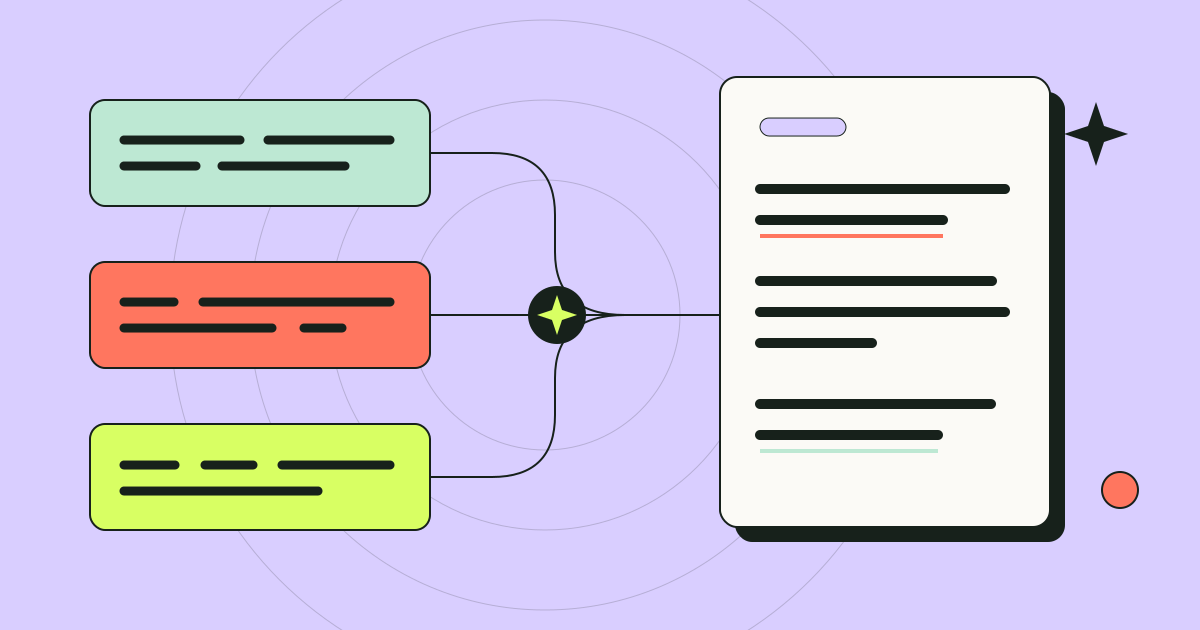
Separate source material into confirmed facts, interpretation, and unresolved questions. Include exact product names, dates, numbers, quotations, and URLs that must survive the edit. Identify who confirmed each claim and where a reviewer can check it.
For a fictional product announcement, a packet might say: CSV export is available to workspace admins; exports include the previous 30 days; the release date is November 4; automatic scheduling is unavailable. These are invented example details, not statements about AIssistify. Their purpose is to show how a bounded brief prevents an attractive draft from promising features the source never supplied.
Ask the model to mark missing information explicitly. Plausible completion is a writing behavior, not a verification method. NIST's Generative AI Profile identifies confidently false output as a risk called confabulation. Opening a citation and checking the actual claim remains your responsibility.
Request an outline before prose
Ask for the argument in a few plain bullets. Each section should answer a real question: what changed, why it matters, how to use it, and what limits apply. Remove repeated sections and anything that merely restates the title.
A short outline is cheap to reject. A polished thousand-word draft makes weak structure harder to notice because you are already invested in its sentences. At this stage, check whether the most useful information appears early and whether the proposed call to action follows from the evidence.
For the fictional export announcement, a good sequence is: explain the manual task, show the export steps, state who has access, and clarify the 30-day limit. An opening about “the future of data-driven collaboration” would use space without helping that customer act.
Give the first draft a bounded instruction
Use a prompt with a clear source boundary and an explicit editing goal. For example:
Draft a 300-word announcement for existing workspace admins using only the confirmed facts below. Lead with the task they can now complete. Use direct language and short paragraphs. Preserve names, dates, quantities, and limitations exactly. Mark missing details as questions. Do not invent customer quotes, results, or personal experience.
The wording is a starting point. Adapt it to the document rather than collecting a longer list of universal writing rules. If the task is simply to shorten a paragraph, request that local change instead of a complete rewrite.
Choose a model based on the work and the available budget. AIssistify's workspace provides disclosed model routes and a maximum for a bounded workflow; availability depends on the deployment. A higher cost or a longer workflow does not certify factual correctness.
Verify claims before polishing the voice
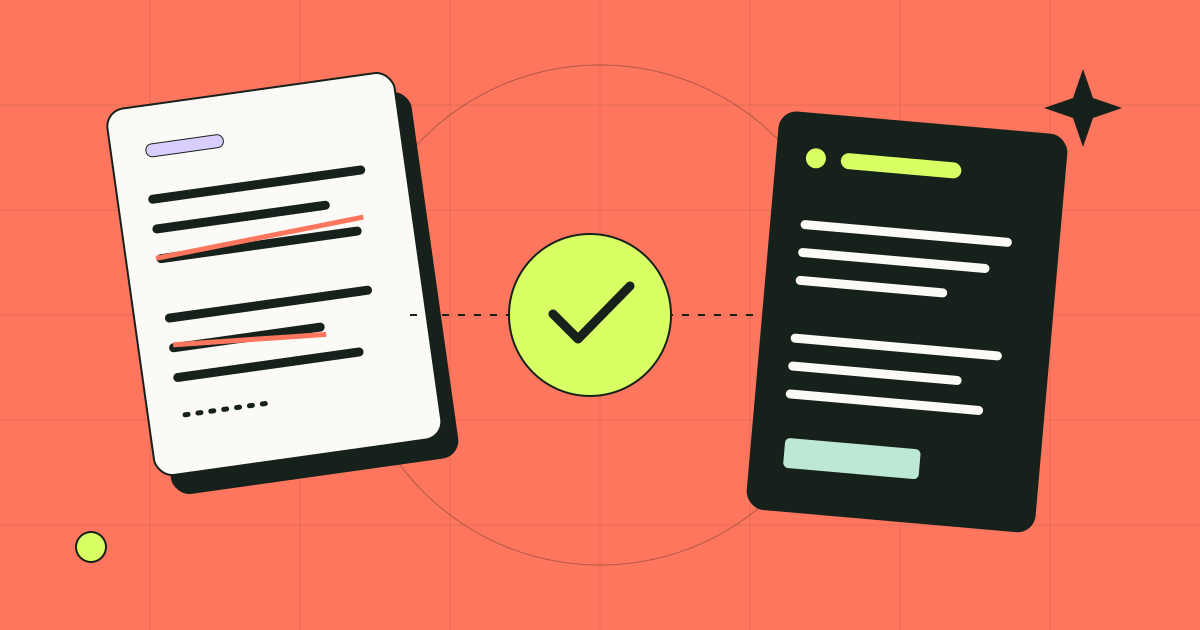
Read once for meaning without changing style. Compare every material statement with the packet. Check whether the model dropped a limitation, broadened an audience, reversed a condition, or converted a possibility into a promise. Those are substantive edits even when the nouns and numbers still match.
Next, open every reference, check quoted wording, and verify dates and units. A literal comparison can catch a changed number while missing a changed relationship. “Available after approval” and “available immediately” can contain the same feature name and describe very different experiences.
Reject unsupported claims or send them back as questions. Asking the same model whether its answer is correct can help surface issues, but it supplies no independent evidence. Give the revised draft another factual read after substantial edits.
Make the language specific
Now remove generic framing, repeated promises, and unnecessary transitions. Replace abstractions with the actual task, object, or consequence. In the fictional announcement, “streamline reporting processes” could become “download the last 30 days as a CSV.” The second phrase is easier to evaluate against the source.
Read aloud to check rhythm and emphasis. Keep technical terms when the reader needs them. A friendly voice can still be exact. The guide to humanizing AI-assisted writing explains how to make these choices without adding random errors or chasing a detector result.
Inspect the final copy and keep a record
Copy-paste can introduce unusual spaces or invisible controls. Use the free inspector to review exact character findings separately from English editorial cues. A finding is a reason to examine context; it does not establish authorship. See the invisible-character guide before removing characters from multilingual text.
Save the approved facts, final version, and any unresolved questions. Follow the disclosure rules of your workplace or publication. The successful outcome is a piece whose claims you can explain and whose edits you can defend. Speed is useful when it leaves enough time for that review.