How to humanize a draft in your own voice
Turn a vague request to sound human into a concrete editing brief. Preserve meaning, identify your voice, and review the changes with a worked example.
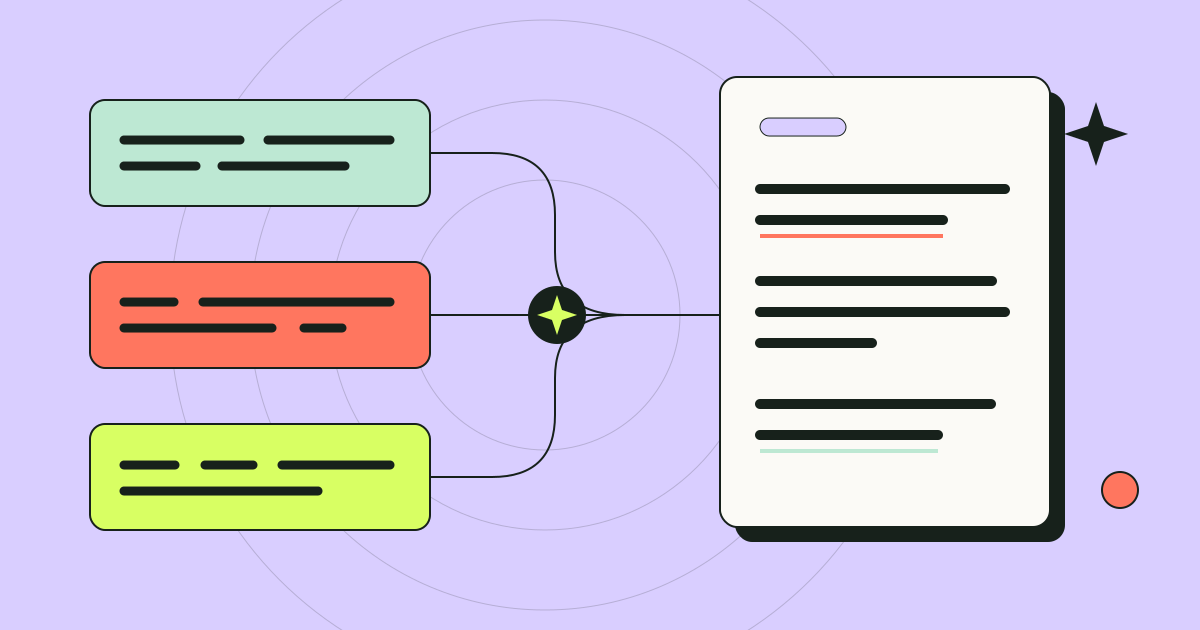
Making a draft sound like you is an editing problem. Your voice comes from what you notice, how you explain it, and which details you choose to keep. A command to “make this human” rarely communicates those choices. A useful brief names the audience, the intended effect, and the facts the rewrite must protect.
You can use the same method for a model-generated first draft or your own stiff prose. Start with one passage, set a clear direction, and compare the result with the original before rewriting the rest.
Describe the voice in observable terms
Labels such as professional, warm, and authentic mean different things to different readers. Translate them into instructions someone could recognize on the page. “Warm” might mean acknowledging a customer's inconvenience before explaining the remedy. “Direct” might mean putting the answer in the first sentence and using the product's actual names.
Select two or three short pieces you wrote for a similar audience. Look for repeated choices: contractions, paragraph length, the amount of technical context, how you open, and how you ask someone to act. Compare examples you still like, rather than treating every habit as worth preserving.
Do not make every sentence conform to an average. A short line can carry emphasis, while a longer one can explain a condition. Voice is a pattern of decisions with room for context. Our tone-of-voice playbook helps translate broad style labels into editing constraints.
Separate style from the material that must survive
Before rewriting, list protected names, numbers, quotations, URLs, product terms, and qualifications. Add the argument in one plain sentence. That sentence helps you notice a rewrite that preserves vocabulary while changing the claim.
For example, “We aim to reply within two working days” is a target. “You will receive a reply within two days” is a promise with a different time boundary. A rewrite can sound smoother while making the service less accurately described. Mark the distinction explicitly in the brief.
Meaning, style, and fluency deserve separate checks. The research paper Evaluating Style Transfer for Text treats content preservation, style transfer, and naturalness as distinct evaluation dimensions. For a working editor, that suggests three questions: did the meaning survive, does the requested voice appear, and does the passage read naturally?
Find the generic layer
Read the draft and mark sentences that could fit almost any company, topic, or author. Broad claims about a changing landscape, inflated benefits, and repeated conclusions often sit in this layer. Ask what concrete information each sentence contributes.
Keep the parts that already work. Rewriting everything increases the amount you must verify and can replace an exact phrase with a more fashionable approximation. Sometimes the strongest edit is deleting an introductory paragraph and starting with the second one.
Replace unsupported enthusiasm with a mechanism or an observation you can substantiate. If you do not have the evidence, narrow the claim or leave a question for the author. Never ask a model to manufacture anecdotes, personal experiences, or customer reactions to make prose feel lived-in.
Work through one concrete example
Consider this fictional internal message:
We are thrilled to introduce an enhanced approach to project visibility that empowers stakeholders to seamlessly stay aligned throughout the delivery journey.
Suppose the confirmed change is simply a Friday email containing the owner, status, and next action for each open project. The audience is a small operations team, and the author usually writes short, practical updates. An appropriate revision might be:
Each Friday, we'll email the owner, status, and next action for every open project. Use it to spot blocked work before Monday's planning meeting.
The revision works because it names the event and the reader's task. It would be inaccurate if the email were optional, covered only selected projects, or had no connection to Monday planning. Those details must come from the real source. This example demonstrates an editing choice, not a factual claim about a shipped feature.
Give the rewrite a focused brief
Try a prompt like this, with your own context and protected details:
Rewrite for a colleague who knows the project. Put the practical change first. Use contractions and familiar nouns, with enough detail to explain the next action. Keep the source's facts and qualifications. Preserve the protected terms exactly. Remove unsupported praise. Do not add experiences, examples, or claims that are missing from the source.
Then provide a short description of your voice, the original passage, and the protected list. A style sample can help, but consider what information you are sharing with the model service. Avoid sending confidential examples merely to teach paragraph rhythm.
AIssistify's workspace supports tone, strength, preservation, and avoid controls. Its optional Voice Reference builds observable traits in the browser and lets you approve which traits to use. The raw reference sample is not sent as that reference; the source being rewritten and your instructions still go to the selected provider when you run a rewrite.
Review the difference in three passes
First compare meaning. Check the main point, audience, promises, conditions, and omissions. Then check protected details literally: figures, links, names, and quotes. Finally, read for voice and flow. Give each pass a separate purpose so a pleasant rhythm does not distract you from a changed claim.
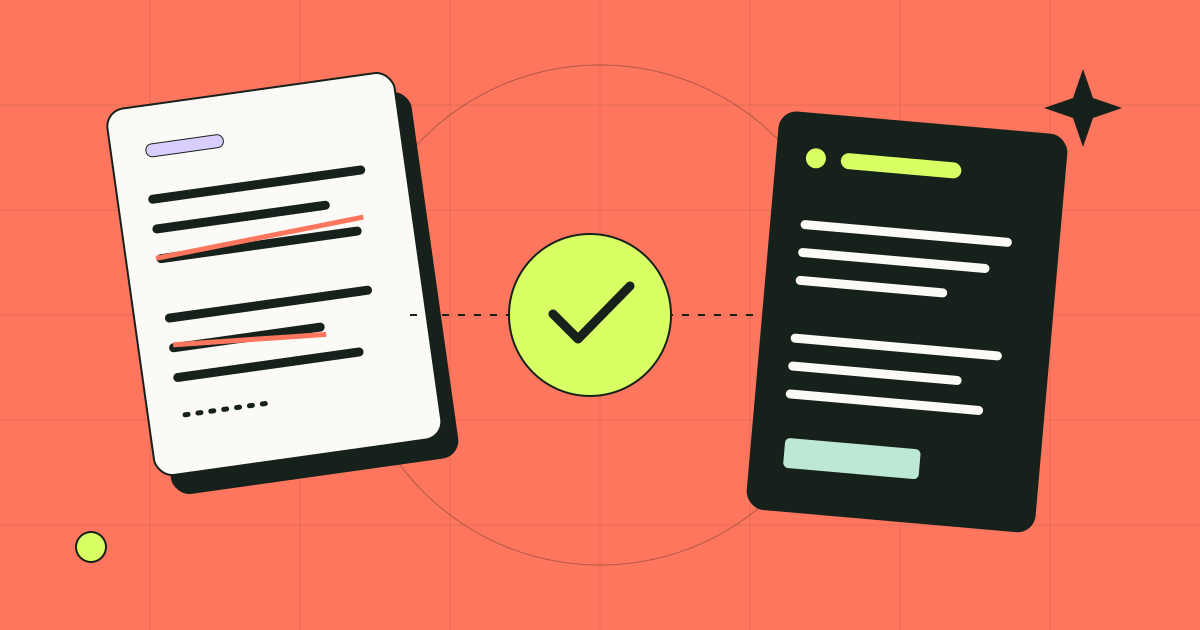
A redline is useful because it shows the edit's extent. It cannot certify that a new sentence is true or that two statements mean the same thing. Read the final version without the redline too; tiny individual edits can combine into an awkward paragraph.
If the result is too casual or too polished, name the issue precisely. “Keep the technical noun and shorten the opening” gives the next pass a bounded task. Save the version you prefer before requesting another rewrite.
Stop when the writing does its job
Do not keep editing until a detector approves. A lower score supplies no evidence that the rewrite is accurate, belongs to you, or meets a publication's disclosure policy. The AI detector guide explains why those results need context.
Read the piece aloud, check whether the reader can act, and use the humanizing field guide for a final review. Your own voice is the version whose choices you recognize and can explain. Keep the useful edit, acknowledge AI assistance where required, and publish only what you are prepared to stand behind.